Wednesday, September 30, 2026

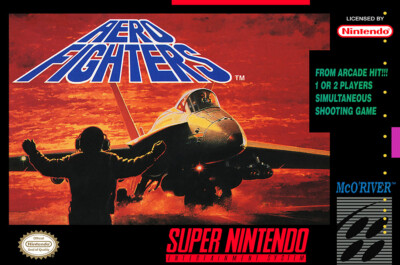
Aero Fighters (SNES) - How many quarters you got?


Aero Fighters/Sonic Wings 
Developer: Video System  
Release Date: 1993 
System: SNES
 
 
 Aero Fighters Super Nintendo SNES BOX ART Premium POSTER MADE IN USA -  SNE142 | eBay UK
 
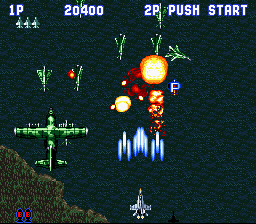
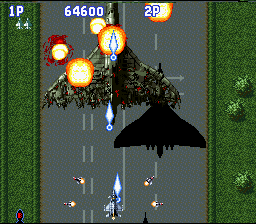
Aero Fighters for the SNES is a port of the arcade game Sonic Wings, and I will say this right off the bat, it shows. This is because Aero Fighters is a hard and merciless game, even cranking this down to easy, maxing out your lives and credits, I can't guarantee an, success in beating this game for a good while. Enemies and bosses come at you aggressively and cheaply, sometimes coming in from the bottom of the screen. The stages are short but will do their darndest to widdle down your lives. Plenty of cheap deaths await you.
 
Screenshot of Aero Fighters (SNES, 1992) - MobyGames 
 
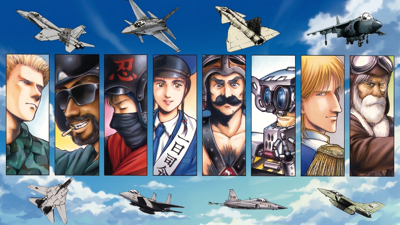
So, with that out of the way, let's talk a little bit about why this game, despite the difficulty this is just a cool and well-made SHMUP. Firstly, characters, this game comes with a shed load of them, 8 base characters and 2 special characters, and each of them has their own base weapon fire pattern and special bomb. They also have hidden stats for their damage and speed. When you start the game you will pick a nation to play as, with 4 nations to play as; US, Japan, Denmark and the UK. A slight quirk of the game is that your character will be dependent on what controller port you are using, with 4 of the characters assigned to player 1, whilst the other 4 being assigned to player 2. It's a little weird and, depending on your setup, a bit inconvenient. This is probably in part to their being a simultaneous multiplayer mode, something I can imagine makes the experience significantly easier. As for characters, it really is a beautifully strange mixed bag. From a fighter pilot trying to save his wife, to a Ninja sent on a mission from his lord, or an idol who has accidentally'd into the whole situation.... Or some of my personal favourites, the Danish contingent, consisting of a brawny, Viking proving he is the strongest in the world, or the Robot just dominating on other machines. The game itself is just... Wacky like that, and I am all for it. My understanding is there is a playable Dolphin pilot in one of the later Arcade sequels.
 
Aero Fighters Images - LaunchBox Games Database 
 
The game is divided into two acts, if you will. The first part will see you playing 3 levels in he nations you didn't pick to play as. So, playing as the US, you won't play the US stage but you will do the UK, Japan and Denmark stage, in a bit of a random order. Ater that there are 3 more stages, set in a few other countries before you tackle the final mission that tasks you with stopping a shuttle from reaching space. Incidentally, in the Japanese version of the game, if you take too long fighting the final boss, it will escape and there is a secret bad ending. 
 
 Screenshot of Aero Fighters (SNES, 1992) - MobyGames
 
Continuing the streak of weird and quirky, there seems to be a random chance that you will fight a special, silly final boss instead of the usual one. At the end of the game, as you are trying to destroy the fleeing rocket, it will split into a smaller missile, which you continue to fight, however, there seems to be a somewhat random chance that instead of the missile, a pod will emerge from the rocket and you will fight a giant monkey, who flies around the screen shooting projectiles at you. It is almost reminiscent of the Osaru from Dragon Ball Z. I don't know if there are specific requirements that need to be done to fight this variant. Much like the quirky roster of characters, having a silly secret boss at the end of the game is apparently a hallmark of the series.
 
 Ending for Aero Fighters-Solo Play 1st Player (Super NES)
 
Despite the difficulty, I really enjoy Aero Fighters, initially it does feel a little like you are commando crawling through a sea of broken glass, bleeding lives and credits at an alarming rate, but I felt that my perseverance was rewarded with this one as with each subsequent playthrough I did, I inched closer to being able to do a 1-Continue Clear. There was no incentive to do this, even RetroAchievements was polite enough to say that just beating the game as a character is worth celebrating. It's certainly doable, but I do like the safety net of hitting the final stage and using a continue there to go into the stage with my maximum lives. Incidentally, the game has a way of tracking how many continues have been used, and 1 have heard of this being done in other games. When you use a continue, and your score resets, you will start with a score where the 1 digit has incremented. Meaning if you used 3 credits to beat the game, your final score would end with a 3 as nothing else in the game can increment that digit in your score. Its a very unsophisticated method of checking how many continues a player used, but I can see this being used as a means to check for 1CC. Anyway, I don't think I have much more to say on this game, _ and that will be the case for some of the other SHMUPtember games, not everything inspires a torrent of thoughts in me.
Play Aero Fighters (SNES) - Online Game | Super Nintendo 


Legendary Wings (NES) - And Legendary box art


Legendary Wings 
Developer: Capcom 
Release Date: July 1988 
System: NES
 
Legendary Wings | Capcom Database | Fandom

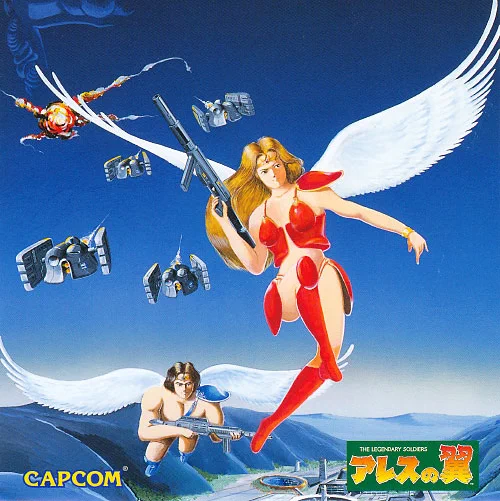
Something that I think is lost in modern gaming is how absurd a game's box art can look It's like with any questionable graphic design choice is made, we need to acknowledge that the choice was made, approved and sent to print. What the conditions were for that choice are unknown, perhaps there was a time crunch, budgetary constraints, or perhaps someone had a vision they refused to shift from forcing a poor artist's hand. Traditionally, the box art is there to capture your attention either through character star power, like with Super Mario World, or Sonic 2. It might go for a more minimalistic approach to inspire intrigue and promise, like the cover to the Legend of Zelda. Or it could just trying to summarise the game in a single image, usually by cramming in game elements. Legendary Wings opts for the latter, and as absurd as the man with wings in a tight, almost lycra, holding a rifle, flying away from a large mechanical, yet stone-like, head is absolutely on-point, true to form exactly what the game features.
 
Post Game Content — Legendary Wings (NES): Games of the Retro-Bit... 
 
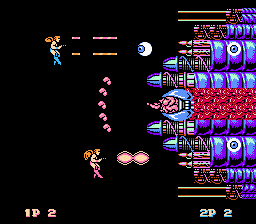
It's glorious and belongs on a mural I want to put together and weirdly compelling box art, along with Valis III for the Turbografx-16. It is from this box art that I felt compelled to check this game out, even more so when I notice that the Developer is Capcom of all people. This surely makes this guy a prime candidate to be included in any one of those fighting collab games that Capcom likes to produce. And, would you believe me if I said there are Legendary Wings references in games like Namco x Capcom, Project X Zone 2 and even Marvel vs Capcom: Clash of Super Heroes? The original arcade version of Legendary Wings contained two playable characters, Kevin Walker and Michelle Heart. For the NES port, it seems like Michelle got the chop, but she had the last laugh as she is a support character in Marvel vs Capcom. Kevin doesn't even get a look in.
 
lesserknownwaifus on X: "Michelle Heart from Legendary Wings" / X 
   
This is the benefit of doing research, it stops me from making comments like that and then wearing egg on my face!
 
Marvel Vs. Capcom: assist character Michelle Heart (Legendary Wings) –  @posthumanwanderings on Tumblr 
 
My personal experience with SHMUPs is that they tend to put all their story in the manual, with an over-elaborated explanation for the game's events, whilst the game itself does the bare minimum to further or explain the narrative they have established This is not true of all SHMUPs, but I doubt most people play them for the engrossing storyline. True to fashion, Legendary Wings is set in the far distant future, where a super computer called Dark, which had helped humanity advance has rebelled. The God of War, Ares, gifts wings to two warriors to put a stop to Dark and save humanity. I suppose the story is supposed to be more invocative of Icarus, and the wings he and his father made. Though in the story the wings fail, mostly due to lcarus' arrogance and flying to close to the sun. I am sure there is a Classics or perhaps an English Lit major who could have a field day getting into the weeds of some of the symbolism going on in the set up for this SHMUP. I should note that the Japanese title for this game is Ares no Tsubasa, or Wings of Ares. So I shouldn't be too surprised that Ares pops up, seemingly, unannounced, in the western release of this game.
 
Get Legendary, get lucky...and go to the DANGER ZONE! | GameWTFs.com 
 
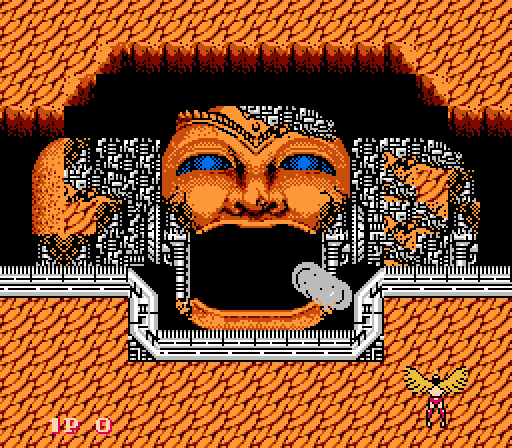
The game is split into two distinct sections per level, with each stage opening with a vertical scrolling section, seeing our protagonist flying over various landscapes, being harassed by a variety of airborne enemies and ground-based obstacles. You have twc weapons, your gun and bombs, the gun can destroy airborne enemies, whilst the bombs can be used to destroy things on the ground. Both weapons can be powered up, by picking up P icons that are dropped by certain enemies. Whilst the gun goes through Jifferent iterations of firing patterns, the bombs just get increased firing range and speed. If you are in a powered up state, taking damage will drop your power by a step. and getting hit at power level one will killyou. About halfway through the vertical stages you will encounter a large head in the ground, reminiscent of what is on tþe box art, that shoots tornados at you. Getting hit by one of these tornados takes you to a " Danger* zone, a horizontally scrolling sub-area that features a mini-boss. During the horizontal sections, you don't have bombs, just your gun. If you survive this area, which isn't the toughest thing in the world if you have a couple of power-ups, you continue. on your way During the second half of the stage, by bombing a certain structure and touching the tornado it releases, you can find a "Lucky" area, which is filled with items that give points, power-ups and also continues. Continuing further, eventually you will reach the end of vertical section, as you approach a temple that is guarded by statues that shoot fireballs at you and eventually face a Dragon mini-boss. Upon defeating the Dragon you enter the temple and continue as a horizontal shooter until you reach the end of stage boss, who is only vulnerable during a certain attack window. Defeat the stage boss rinse and repeat for 5 stages and beat the game!
 
 Forgotten Gems: Legendary Wings (1988) 20,000 years in the future, mankind  has built a giant supercomputer named DARK to rule... :: icksmehl.de
 
But, here is the rub with Legendary Wings. The format for each stage is exactly the same. Sure, the first part of the vertical section is different, with new enemies and obstacles, the horizontal section towards the stage boss is different with new enemies...But, the "Danger" zones, the lucky rooms, the temple approach, Dragon mini-boss and even end of stage bosses are all identical, with only a small increase in difficulty for the end of stage bosses and the "Danger" zones having a different arrangements of enemies before the mini-boss. It all feels, almost placeholdery, like there was some idea that each stage would have a different mini-boss, or the end of stage bosses would be visually different..But they're not. It makes for a bland, slightly, repetitive experience, which is a little disappointing because the game itself isn't terrible. Though, I will acknowledge that the final boss does have an additional, unique phase.
 
 Legendary Wings – Hardcore Gaming 101
 
NES: Legendary Wings 
 
Legendary Wings is not a hard SHMUP either, there are some areas where things might get a little dicey, and there are some annoying glitches that can frustrate the player Picking up items or taking damage removes your collision for a second or so, meaning you can accidentally clip into walls and be crushed by the scrolling screen. But I would say with a modicum of perseverance this is a game that can be beaten with only a couple of minor hiccups along the way. I would hesitate to call the game a bad game, it is mostly reasonably competent and enjoyable, but am certainly not going to be rushing back to this one anytime soon.


SHMUPtember 2026


During the month of September, I had the most inspired idea, why not do a themed gaming month? It's not like I don't already do this with October with Spooptober, and November with Nintember That would mean that a straight quarter of the year would be preoccupied with a certain subset of games. I suppose, the benefit of Nintember is that I play Nintendo developed games, which come in a variety of genres. Anyway, what was the plan for September? Well, it was to play Shoot-Em-Ups, or SHMUPs for short. It's one of those on paper good ideas, until I remember that SHMUPs are not a bread-and- butter gaming genre for me. Perhaps if this was Platformarch (Hey, that's an idea) or some other genre of games this task would not be as daunting as it was. Regardless, I decided to look around the vicinity of the beast, finding weird or interesting SHMUPs to play for a month. I am still testing the waters and whilst I could have played infamous games, like Ikaruga Gradius III or DoDonPachi I did still want to have my nerves, sanity and my Steam Deck intact for at least couple more years

Super Aleste SNES 62 | The King of Grabs

Before we go any further, I just want to explain what Shoot-Em-Ups are, mostly for the uninitiated. I imagine most people who click through to read my journey probably have a much better understanding of SHMUPs than I do, so feel free to skip past this entry and head straight to the games because I will probably stun you with my overwhelming ignorance of the genre. The term Shoot-Em-Up is an umbrella term that encompasses many different gameplay styles where you navigate a character through a barrage of enemies and obstacles to eventually challenge an end-of-stage boss, rinse and repeat a number of times, increase the difficulty as stages progress until the end of the game. I would say that is, mechanically, the core of the genre. Flavour is typically added via the means of power-ups to your main weapon, alternative weapon pick-ups, screen clearing "bombs", manoeuvrability upgrades, etc. In my head, SHMUPs commonly come with a kind of brutal difficulty, where small mistakes can lead to untimely deaths, causing you to lose power-ups and be in an incredibly vulnerable state trying to rebuild your arsenal or you could just give up and let the game over come because the writing is on the wall. SHMUPs tend to be reasonably short, I would say the average SHMUP is no longer than 30 minutes from start to finish, this is mostly because of the intensity of action in these games and the level of focus required would be exhausting if the game went on for longer than an hour. Also, I say from start to finish, this assumes a reasonably clean run of the game, which could take hours to hit that level of game mastery. Most of that time will be spent memorising enemy formations, attack patterns and strategies for bosses. Due to the general flow and structure of these games, a common challenge is to beat the game without using a continue. This is called a 1CC or 1-Continue-Clear, this concept whilst at times just a personal goal/challenge for some, has been incorporated into some games as a requirement for players to get the game's true ending. For SHMUPtember I focussed primarily on the horizontal and vertical scrolling SHMUPs, but there are types of games that some might classify as part of the wider umbrella, such as the run-and-gun, multi-directional shooter, or the rail shooter. The latter I would personally put in a separate genre, but does still have the hallmarks I would associate with a SHMUP.
My initial hesitance to doing this themed month comes from a small degree of history with SHMUPs. Growing up, I admittedly didn't play many SHMUPs and depending on how we categorise them, I owned at best, three? Perhaps four? At a push. As a slight a tangent, do we class Star Fox as a SHMUP? That is Nintendo's Star Fox, not the Star Fox that came out for the Atari which allegedly prompted the European name for Star Fox be changed to Star Wing. If we discount Star Fox, the only SHMUP I can remember owning was an Americar import game, Space Megaforce, which is the western release of Super Aleste. I have a lot of love and nostalgia for Space Megaforce and it remains one of my favourite SHMUPs to this day, even after playing a whole bunch more recently. I had beaten the game a couple of times, but never pushed myself past the normal difficulty level, mostly because Aleste's more advanced difficulties add some interesting quirks. Another game that I have memories of, but never owned, was Biohazard Battle on the Sega Megadrive/Genesis. The western box art for that lives rent free in my head as pretty peak box art. 
Bio-Hazard Battle (Video Game 1992) - IMDb 
 
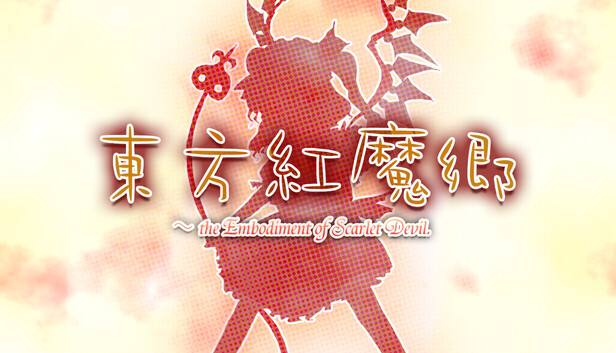
As console generations advanced, I feel that the SHMUP genre became more niche, and my personal preferences shifted. Why would I buy lkaruga on the Game Cube when Rogue Leader was right there? So, we can jump forward about six or seven years when I entered my Weeb phase. I am rather upfront and derogatory when it comes to talking about this, it was a part of my life where I watched Anime and read Manga as a weird counter-culture protest, masking it behind a "curiosity" of my own personal heritage. For context, my grandmother on my mother's side was Japanese, making me a quarter Japanese, which is an excuse and very tenuous at best link to a culture and society I was becoming increasingly interested in. Anyway, during this time I became very interested in Doujinsoft, and Doujinshi by association. Keeping it as simple as possible, Doujinsoft are essentially Japanese indie games, but that feels like a conversation for another day. It was in this interest that I stumbled across something that would shape my understanding of the SHMUP genre going forward, and I would say it has been a net positive, but there is a lot of negatives that comes with it. Touhou.
 
Touhou Koumakyou: Classic - the Embodiment of Scarlet Devil on Steam 

Now, I have a lot of love and respect for the Touhou franchise, mostly because of the music and the creations that have come about because of it. But, I would be remiss to ignore the damage this had done to my perception of the SHMUP genre. Touhou resides in the Bullet Hell sub-genre of SHMUPs, a style of game that is characterised by enemies (Mostly bosses and sub-bosses) having visually amazing and complicated looking bullet patterns, the hell portion of it being how much of the screen real estate is dominated by bullets and the ask of the player is to navigate these patterns, attacking is somewhat secondary. I am not ashamed to say that skill issues are the barrier for me here, my approach to gaming has typically been more reactionary than pre-planned, or if there is anything planned, it is a short sequence or step in the wider picture. Historically, whilst I have always had some degree of stubbornness when it comes to playing games, I was also reasonably quick to move on, I didn't want to put in the time to become competent enough at the games I was playing to achieve the seemingly impossible. But, it was due to this period with Touhou where I figured that SHMUPs weren't for me. In hindsight it seems ridiculous to brush off a genre of games because I struggled with a fringe example, my only reasoning would be more about not enjoying the gameplay loop and the inherit frustrations of learning the game, instead of reacting good enough. I suppose the other thing with Touhou, I was able to "beat" some of the games, by chucking enough lives and continues at a situation, but this prevented me from getting any of the good endings for the games I played in the series, as the games demand a 1-Continue-Clear to get a good ending. So, mentally, I could see the goal in the distance, but the gap between my current position and that goal felt too vast. Not without significant time and mental investment.
 
Touhou 06: The Embodiment of Scarlet Devil - LaunchBox Games Database 

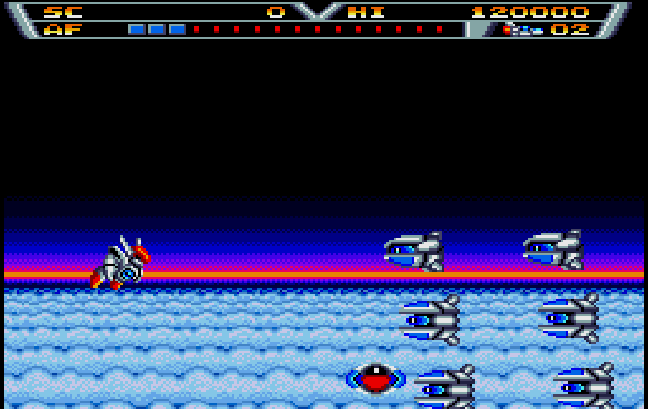
This brings us closer to the modern day, I suppose, I can't think of any other notable stops on this prelude, besides the time I spent playing Space Impact on my Dad's Nokia 3310. As with everything I talk about here, we are now in the RetroAchievements era anc I was revisiting old games, beating and logging things from my childhood, including a certain Space Megaforce. At this moment, around 2024, I wasn't Mastery hungry, just beating the game was enough for me at the time. That was a badge of honour. The site itself organises games in numerous ways, with genre hubs, developer/publisher hubs and of specific interest here; series hubs. This was when I learnt that Space Megaforce was Super Aleste, and that there were several games in the series. In my mind, I said to myself, if I can beat Space Megaforce, then Aleste, GG Aleste, MUSHA and Power Strike should be within my ability, right? And, if you have followed me on Fedi for a while, you may be aware that I speak of the Aleste series in obnoxiously positive tones, especially the GG Aleste games. At some point, I will talk about these games in more detail, I have enough words and thoughts to fill a chapter of a book. Despite having an overall decent time with Aleste, I was still treading cautiously around the SHMUPs, before now I only picked up Arrow Flash and Abadox: The Deadly Inner War. Both, I should add, decent games. Initially, my September plan was to revisit games I had beaten but not mastered. I have become a little obsessed over my ratios. Initially, I started with the Aleste games, as they were enjoyable and after remembering they had infinite continues, the challenge became more about blind stubbornness over skill, that was something I knew I could rise to. But even though the stress of certain segments in certain games were peaking my blood pressure and causing me to make noises unheard of within the presence of my Wife. I came out of the experience.. Kinda wanting more. Because a run of a game could be within the scope of twenty to thirty minutes, this fit with my availability far better than chipping away at a JRPG or a Collect-a-thon. It was a weird moment of clarity. Suddenly the appeal made sense, the short-term memory was firing on a handful of cylinders, and I was feeling more competent. It was at that moment I figured, because the naming convention made sense, that I would strive to play a bunch of SHMUPs over the month of September, and dub it SHMUPtember, and you better believe I felt smug about the name.
 
Arrow Flash | ClassicReload.com

 
So, if you're just here for the games and some expanded views on them, welcome back and for those of you who now regret the last few sections, I'm terribly sorry. It will happen again on a different topic. So, let's actually talk about the games I did play during SHMUPtember 2026:
 
•     Legendary Wings                          NES 
•     Aero Fighters/Sonic Wings            SNES 
•     Robotech: The Macross Saga      GBA 
•     InsectorX                                       NES 
•     InsectorX                                       Megadrive/Genesis 
•     Coryoon: Child of Dragon            PC Engine 
•     Alpha Mission                               NES 
•     Curse                                              Megadrive/Genesis 
•     Final Soldier                                  PC Engine 
•     U.N Squadron/Area 88                 SNES 
•     Trouble Shooter                            Megadrive/Cenesis 
•     Burning Angels                             PC Engine 
•     Aleste 2                                        MSX 
•     Aleste Gaiden                              MSX 
•     GG Aleste 3                                 Game Gear
 
You might think that, looking at the game list, I randomly chucked darts at a board and just went with the flow, and you'd be partially right in that assumption but there was also some degree of calculation. Some of it was just looking at the box art and feeling obligated to play it, this was the case for both Legendary Wings and Curse. Others, it was just a matter of looking at some screen shots or the RetroAchievements mastery badge. But, one core thing, I also looked at any comments or completion rates on these games. Not everything I played was in the realms of "everyone has beaten this" territory, as of writing this Burning Angels only have six other players who have mastered it. So there was still games that would have and did challenge me
Right, without any further delay, I think I should start talking about some games. I will go through them in the order I have laid out above.
 

Aero Fighters (SNES) - How many quarters you got?

  Aero Fighters/Sonic Wings  Developer: Video System   Release Date: 1993  System: SNES         Aero Fighters for the SNES is a port of the...